

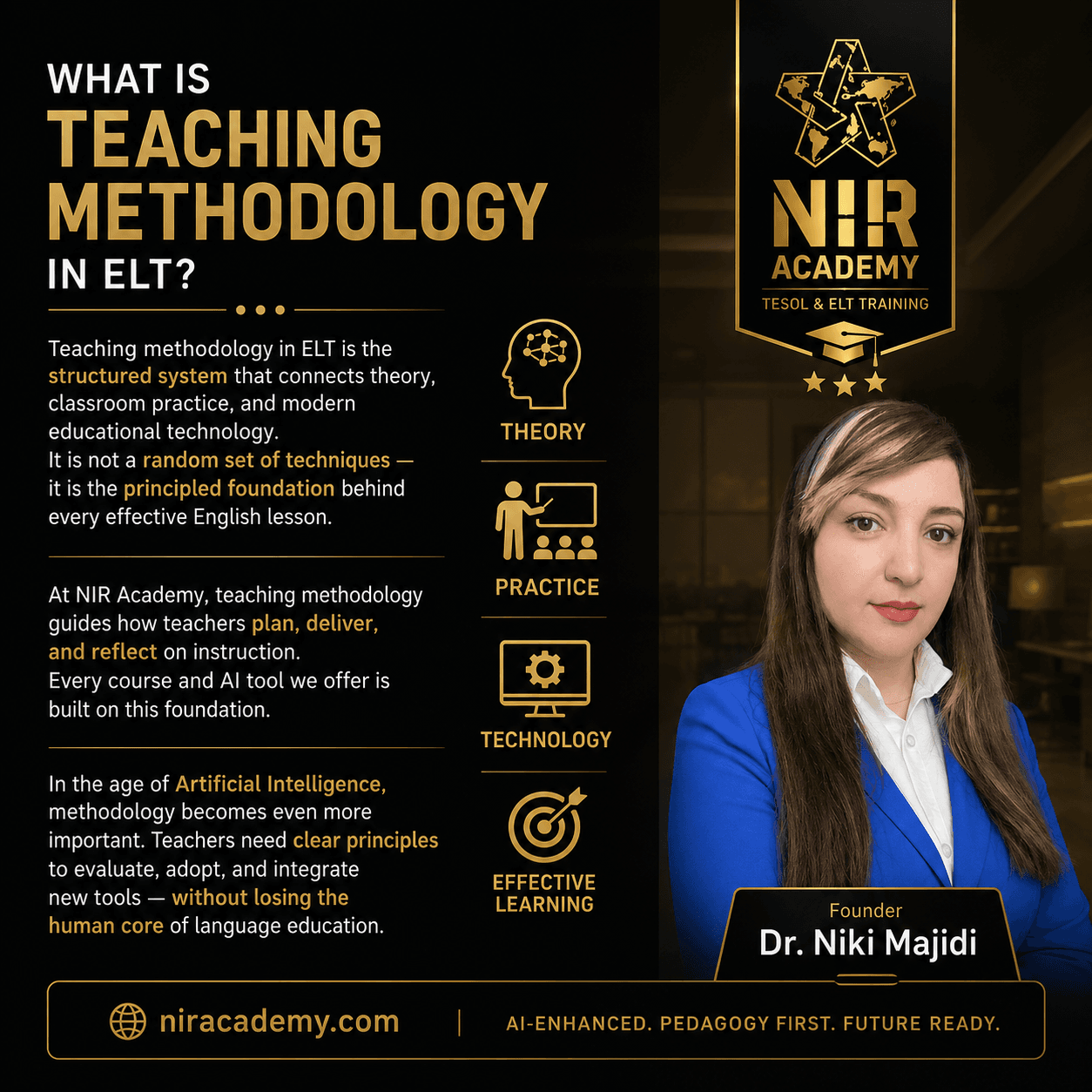
What Is Teaching Methodology in ELT?
Teaching methodology in ELT is the structured system that connects theory, classroom practice, and modern educational technology. It is not a random set of techniques — it is the principled foundation behind every effective English lesson.
At NIR Academy, teaching methodology guides how teachers plan, deliver, and reflect on instruction. Every course and AI tool we offer is built on this foundation.
In the age of Artificial Intelligence, methodology becomes even more important. Teachers need clear principles to evaluate, adopt, and integrate new tools — without losing the human core of language education.
- Communicative Language Teaching (CLT)
- Task-Based Language Teaching (TBLT)
- Learner-centered instruction
- Meaning-focused communication
- Interaction-driven learning
- Evidence-based pedagogy
- AI-enhanced — not AI-replaced — teaching
Key Methodological Frameworks in ELT
The three approaches that form the backbone of research-informed English language teaching.
CLT focuses on real communication rather than memorization of rules. Students learn to use language, not just to know it.
- Meaning over form
- Real-life communication tasks
- Fluency development
- Functional language use
TBLT organizes learning around meaningful, real-world tasks. Language emerges naturally from completing the task.
- Problem-solving activities
- Information gap tasks
- Role plays and simulations
- Higher engagement and fluency
Instruction designed around the learner’s needs, goals, and strengths — not around a fixed syllabus or textbook.
- Differentiated tasks
- Student voice and choice
- Formative feedback cycles
- Autonomy-building strategies
The NIR Academy Lesson Design Framework
A research-informed lesson structure that balances language input, practice, and meaningful communication.
Fluency comes before perfection. Teachers who understand this produce more confident, communicative learners.
AI in ELT Teaching Methodology
Artificial Intelligence is transforming how English language teachers plan, deliver, and assess instruction. At NIR Academy, AI is integrated into methodology — not placed above it.
The principle is clear: AI supports the teacher. It does not replace professional judgement, pedagogical decision-making, or human interaction.
Teachers who understand methodology can use AI tools effectively. Those who don’t risk adopting technology without purpose — producing activity without learning.
Explore the full framework: AI in ELT Pedagogy Course →
Teaching Methodology Is a System — Not a Set of Tricks
Modern ELT teachers need three things working together: sound pedagogy, real classroom practice, and purposeful use of AI. NIR Academy provides the framework for all three.
Frequently Asked Questions about ELT Teaching Methodology
Common questions about teaching methodology, CLT, TBLT, and AI integration in English Language Teaching.
At NIR Academy, Teaching Methodology ELT is grounded in CLT, TBLT, and evidence-based pedagogy — not random techniques or trends.
CLT prioritizes fluency, interaction, and functional language use, which reflects how people actually communicate in real life.
The result: higher engagement, more authentic communication, and improved fluency compared to traditional grammar-focused approaches.
At NIR Academy, AI tools like NIRA AI are built on pedagogical frameworks — meaning AI enhances the teacher’s work without replacing professional judgement or human interaction. Learn more: AI in ELT Pedagogy Course →
AI is a powerful support tool — but effective teaching methodology must always come first. At NIR Academy, the principle is clear: Pedagogy First. AI Enhanced.
Both share the goal of developing communicative competence, but TBLT provides a more structured framework for lesson design.
Your ELT Learning Path — Start Here
Follow this structured path to build from core teaching methodology to full AI-enhanced ELT professional development and certification.
